MY ROLE:
Senior Product Designer
TIMELINE:
2024
PLATFORM:
Web & Mobile
TEAM:
2 Designers, 3 PMs, 12 Engineers
about.
MirrorTalk is an AI-powered tool developed by Swivl to facilitate spoken reflection, aiming to deepen thinking and differentiate instruction.
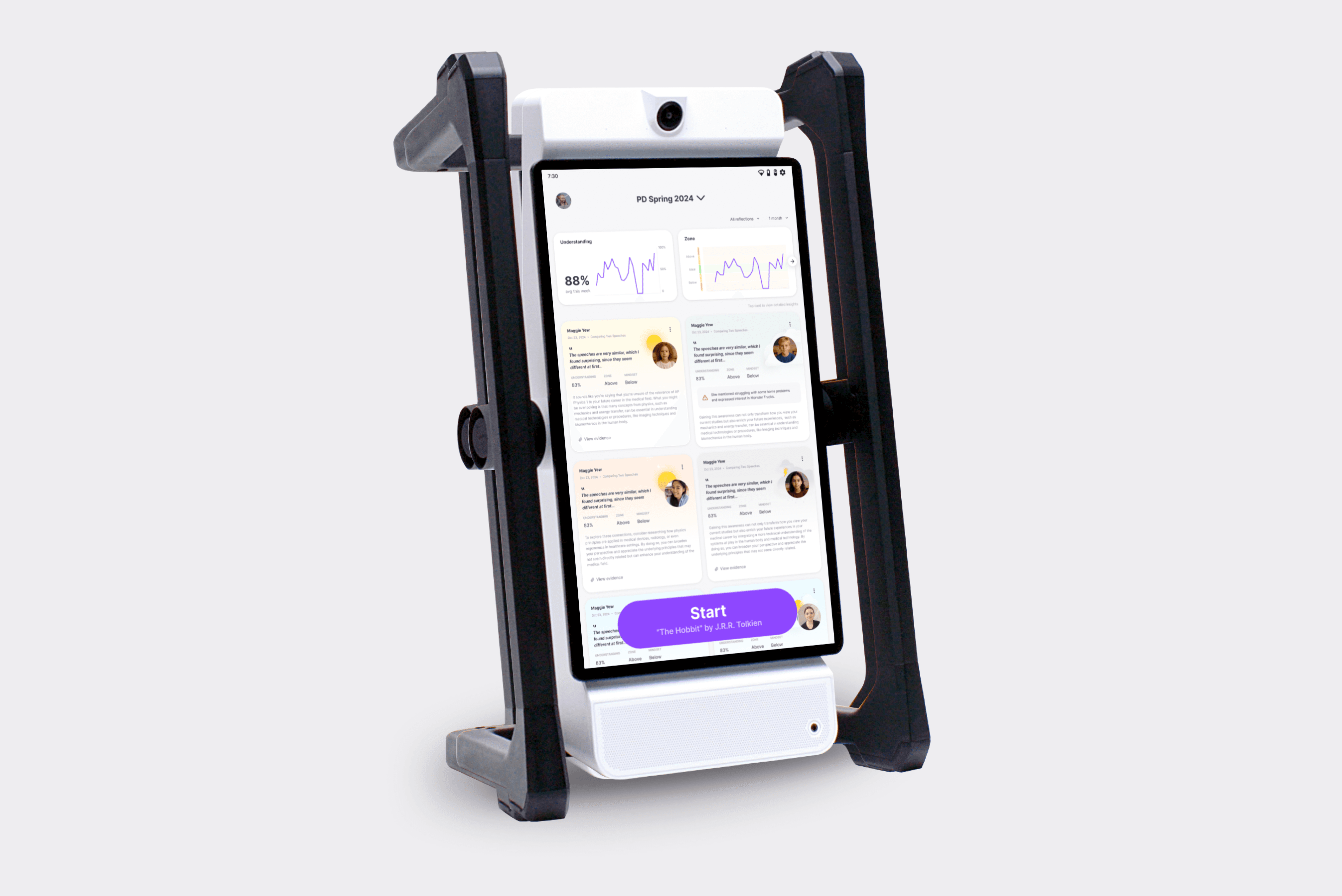
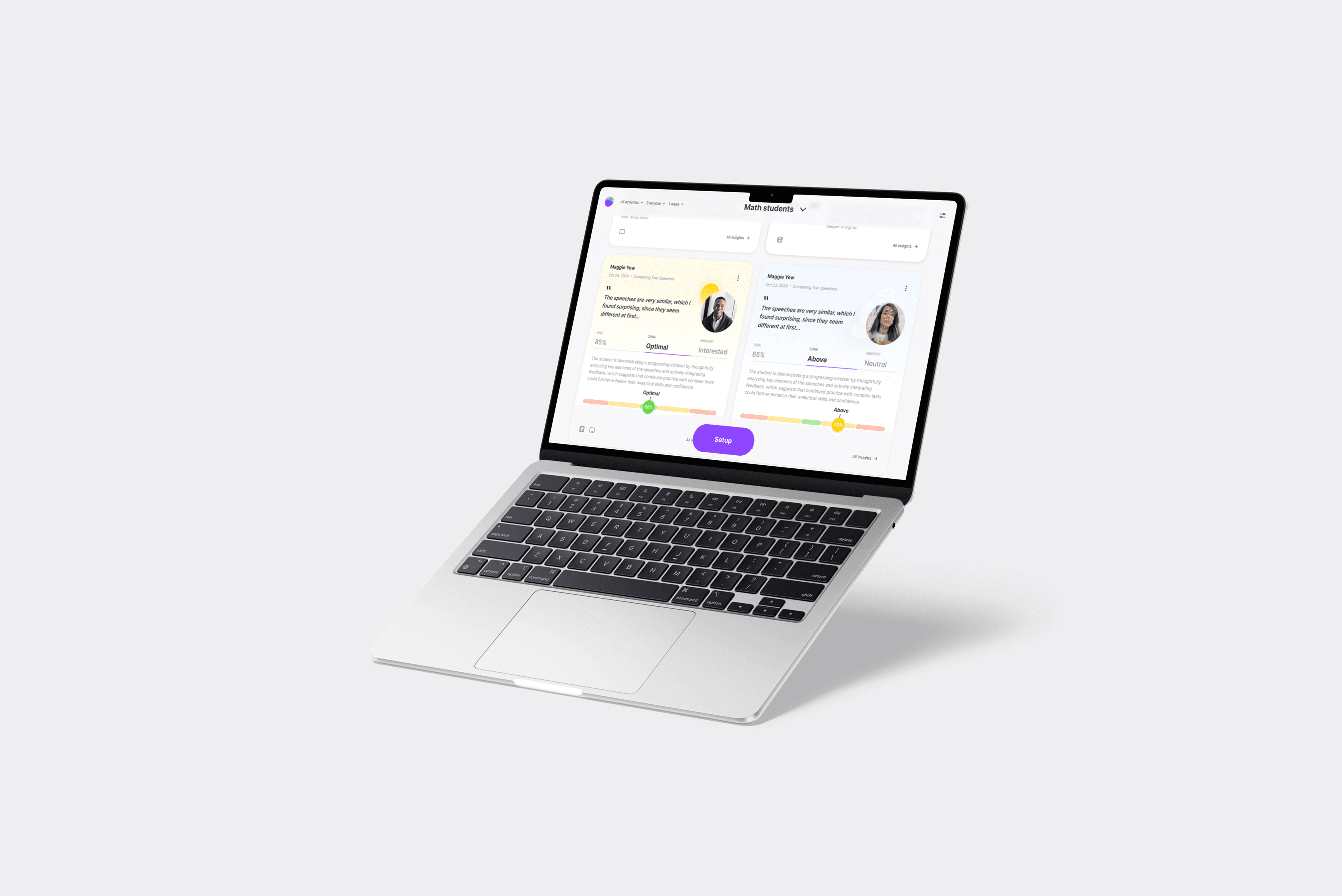
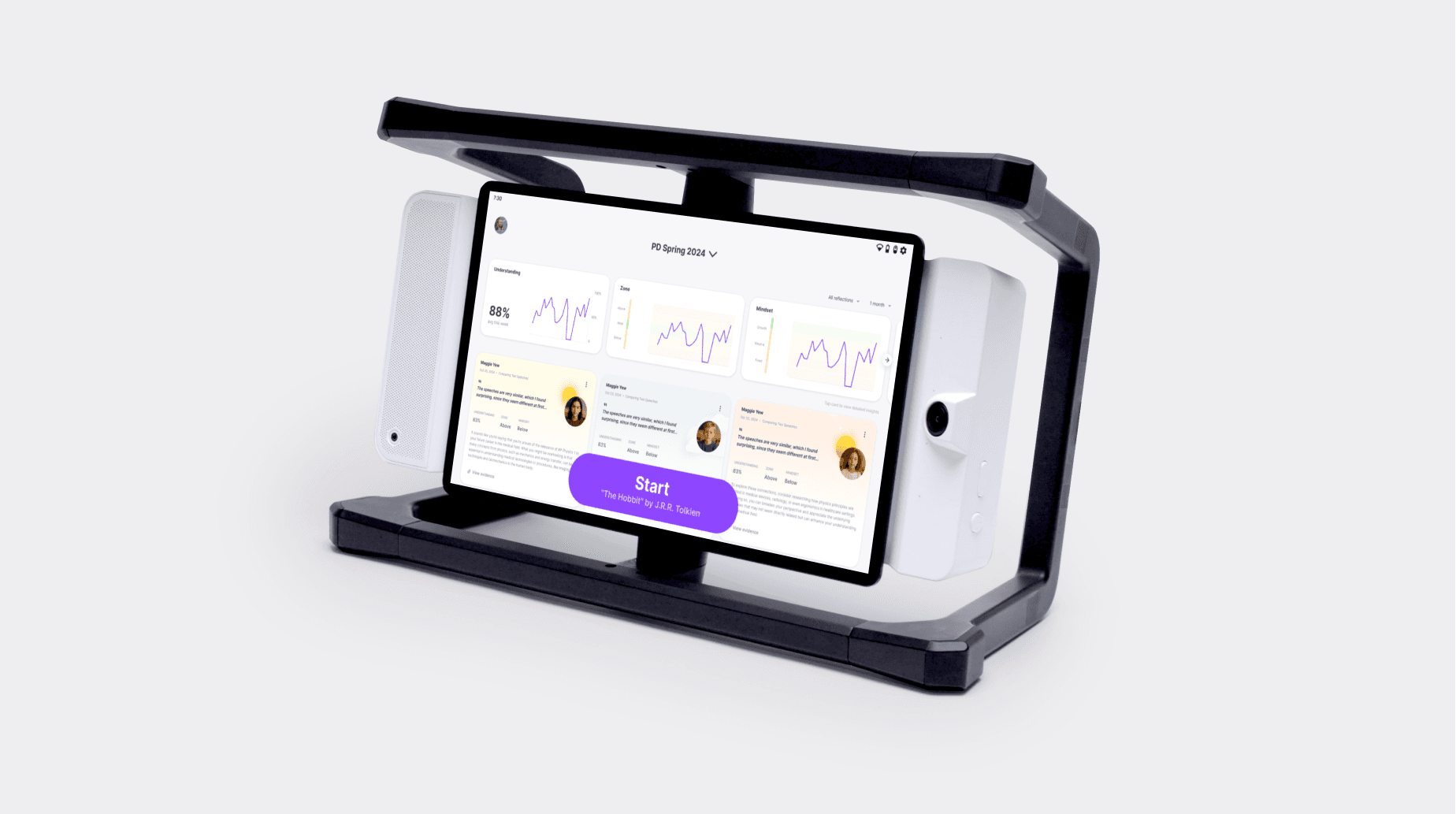
As the Senior Product Designer, I focused on improving the dashboard to help educators better understand student reflections, making it easier for them to support their students and adapt their teaching strategies. I also elevated the app’s visual experience and co-developed a scalable design system in close collaboration with the marketing and engineering teams.
the challenge.
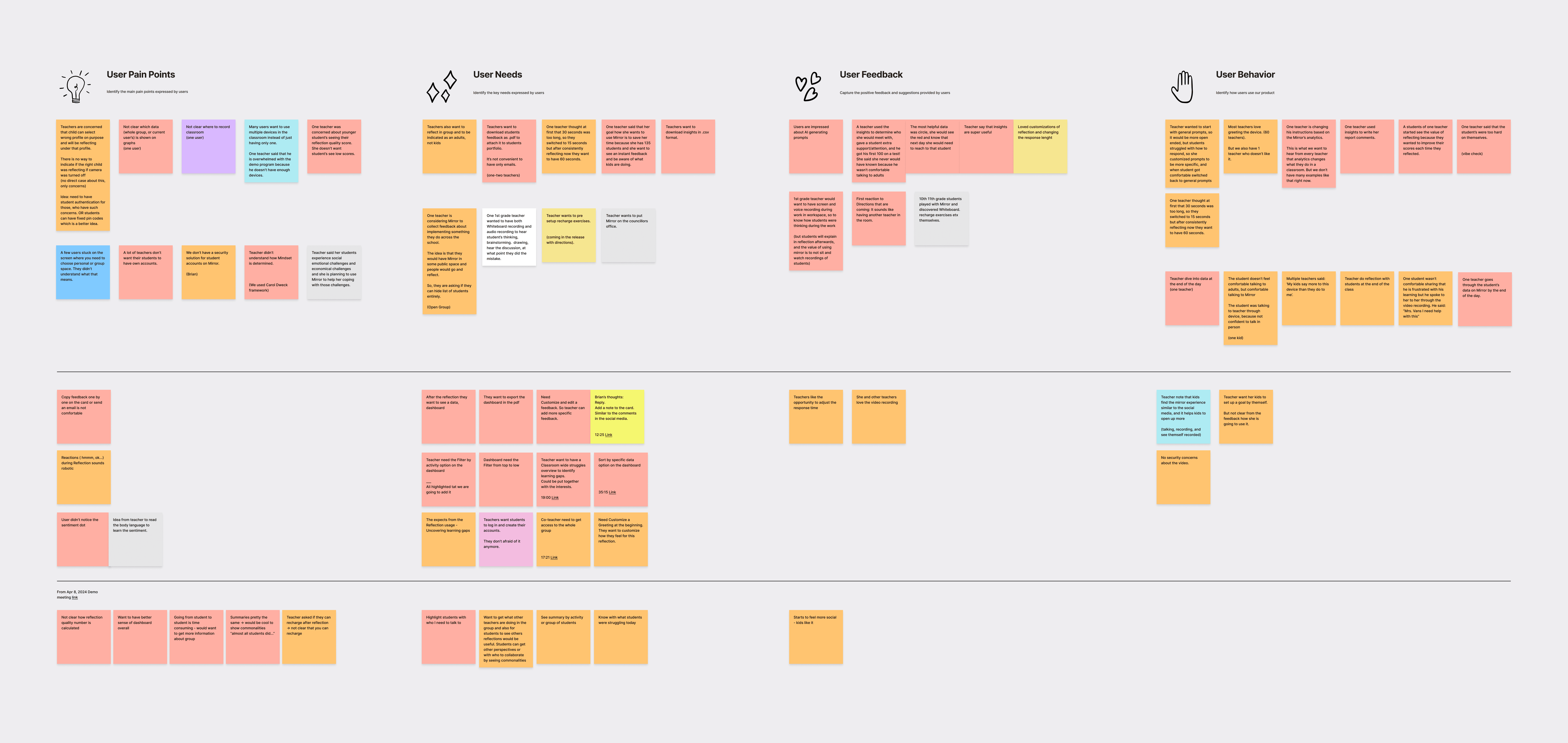
While MirrorTalk offers valuable insights, feedback from educators highlighted challenges in the dashboard’s usability. Educators found the MirrorTalk dashboard difficult to use for quick decision-making. Charts were dense and hard to interpret, and reflection cards were overwhelming, making it challenging to extract key insights. The lack of clarity and personalization limited the dashboard’s effectiveness in supporting student growth.
Key insights:
1
Educators Need Quick Insights. Teachers require immediate understanding of student progress to adjust instruction accordingly.
2
Students Seek Clarity. Learners benefit from clear, concise feedback to guide their reflection process.
3
Consistency Builds Trust. A uniform design language enhances user confidence and navigation efficiency.
goals.
core features.
Dashboard Charts
Through user feedback and usage analysis, we identified several key issues with the existing charts:
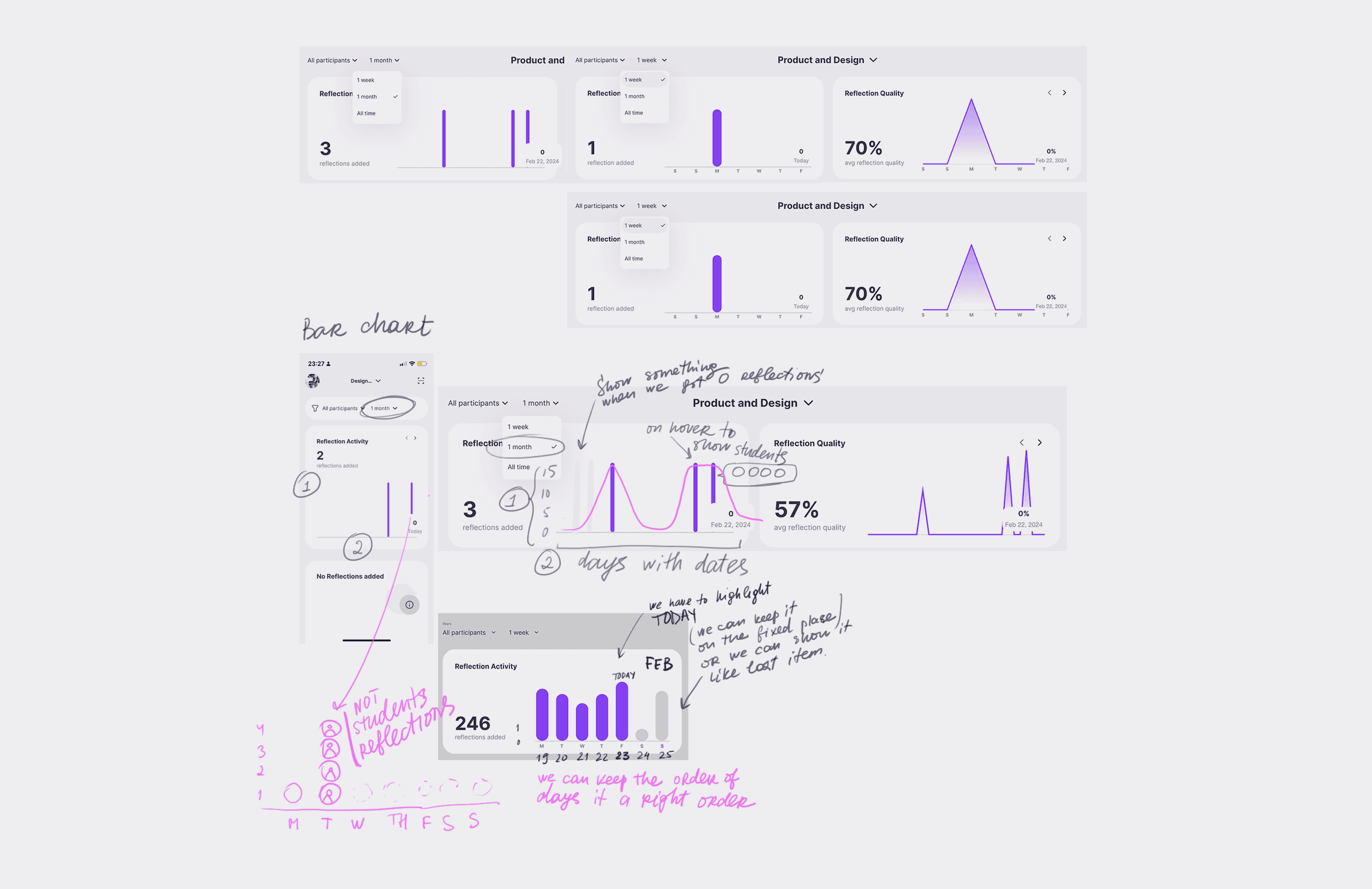
Today's stats were difficult to identify and interpret.
Empty or unlabeled charts appeared broken and confusing.
The dashboard had too many graphs with no clear hierarchy.
Navigation felt overwhelming and it was unclear what data mattered most.
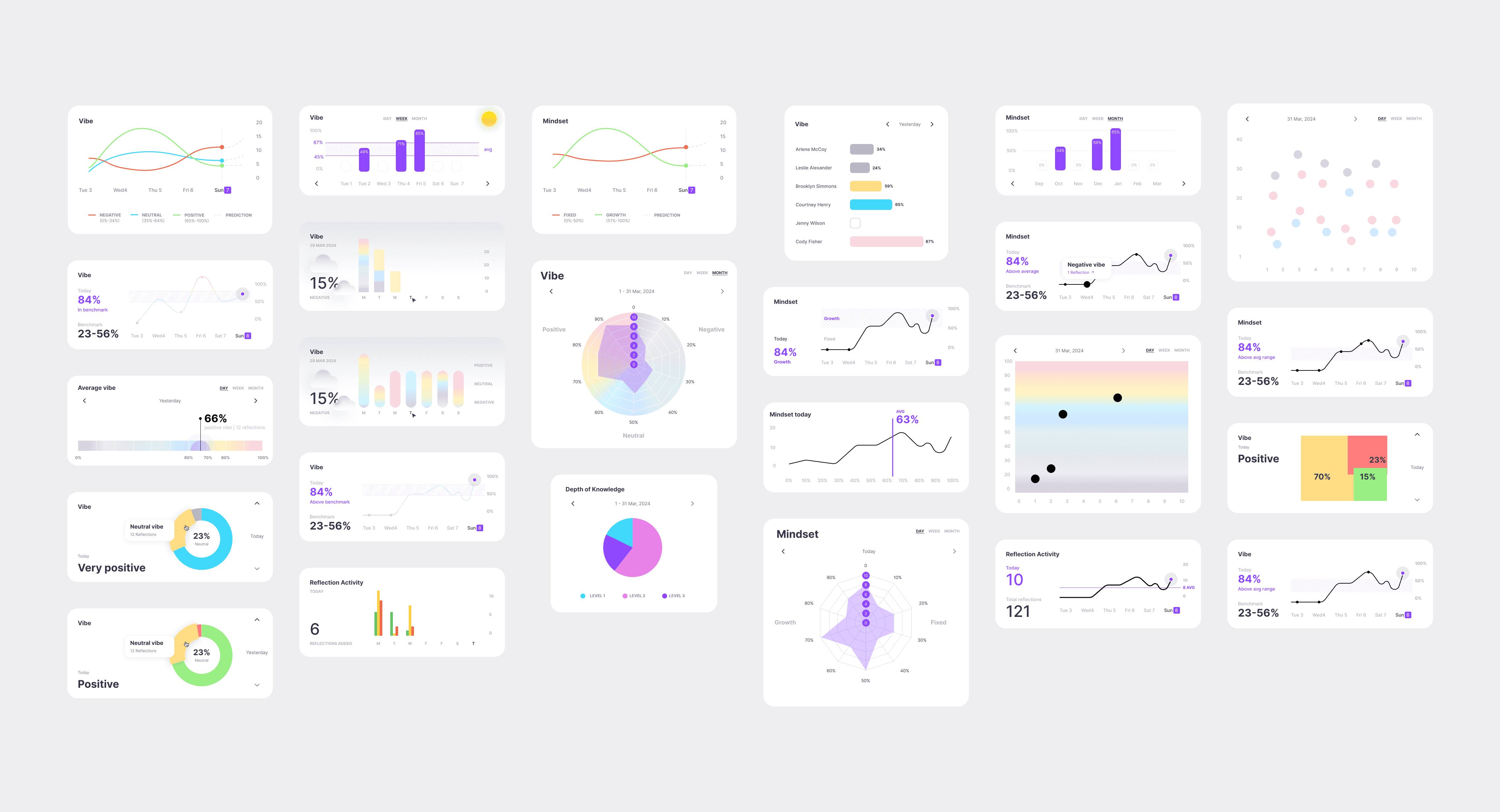
To address these issues, I experimented with various chart types and layouts like bar graphs, line charts, heatmaps and stacked visuals. Focus was on evaluating each for clarity, usability, and relevance to educators' needs.
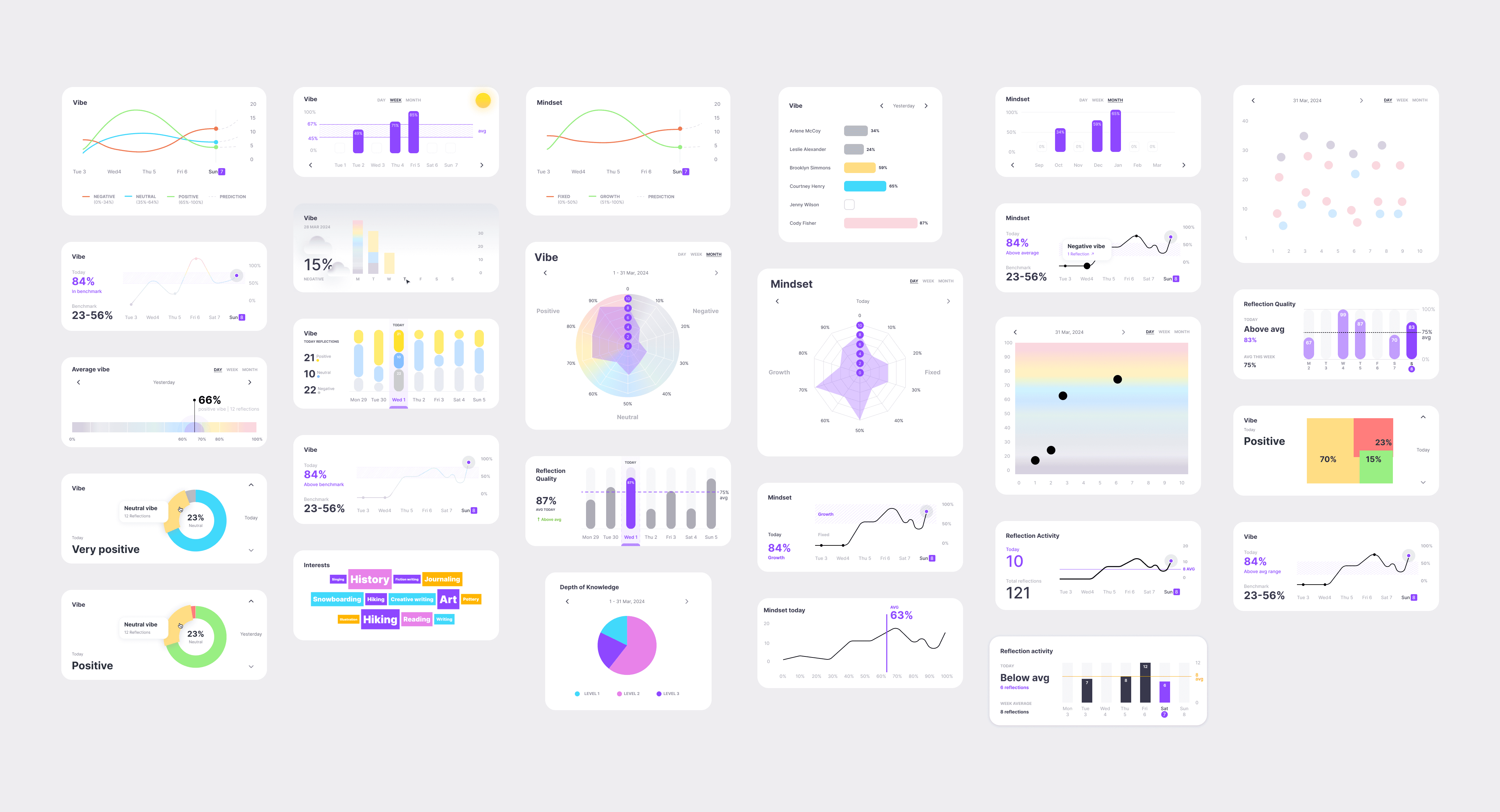
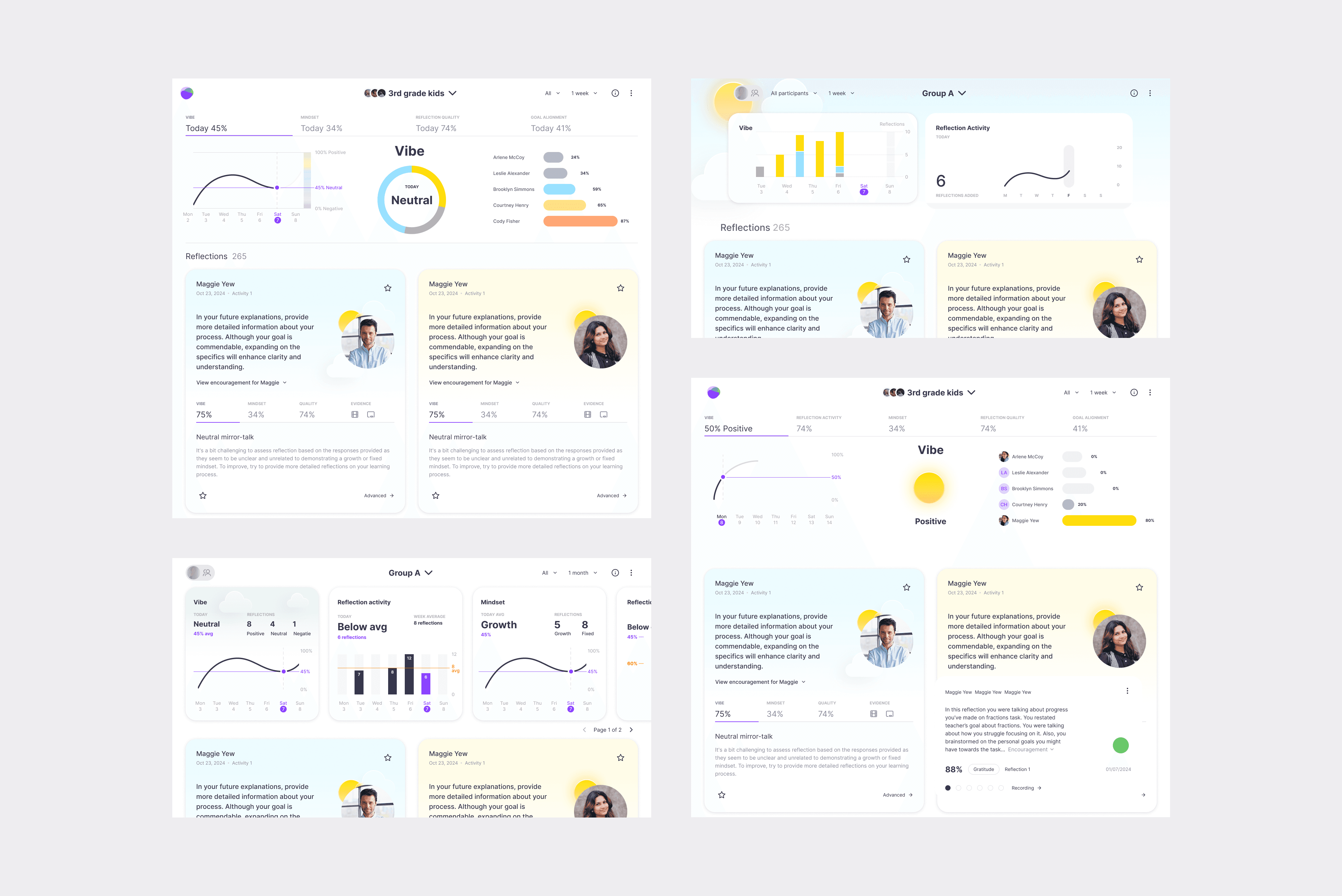
Through testing and feedback, we streamlined the dashboard to focus on four core charts that provided the most actionable insights that reflect contenr from the reflection cards:
Evaluates depth, completeness, and effort
Measures signals related to growth mindset and resilience
Measures signals related to growth mindset and resilience
Captures the overall emotional tone of student reflections
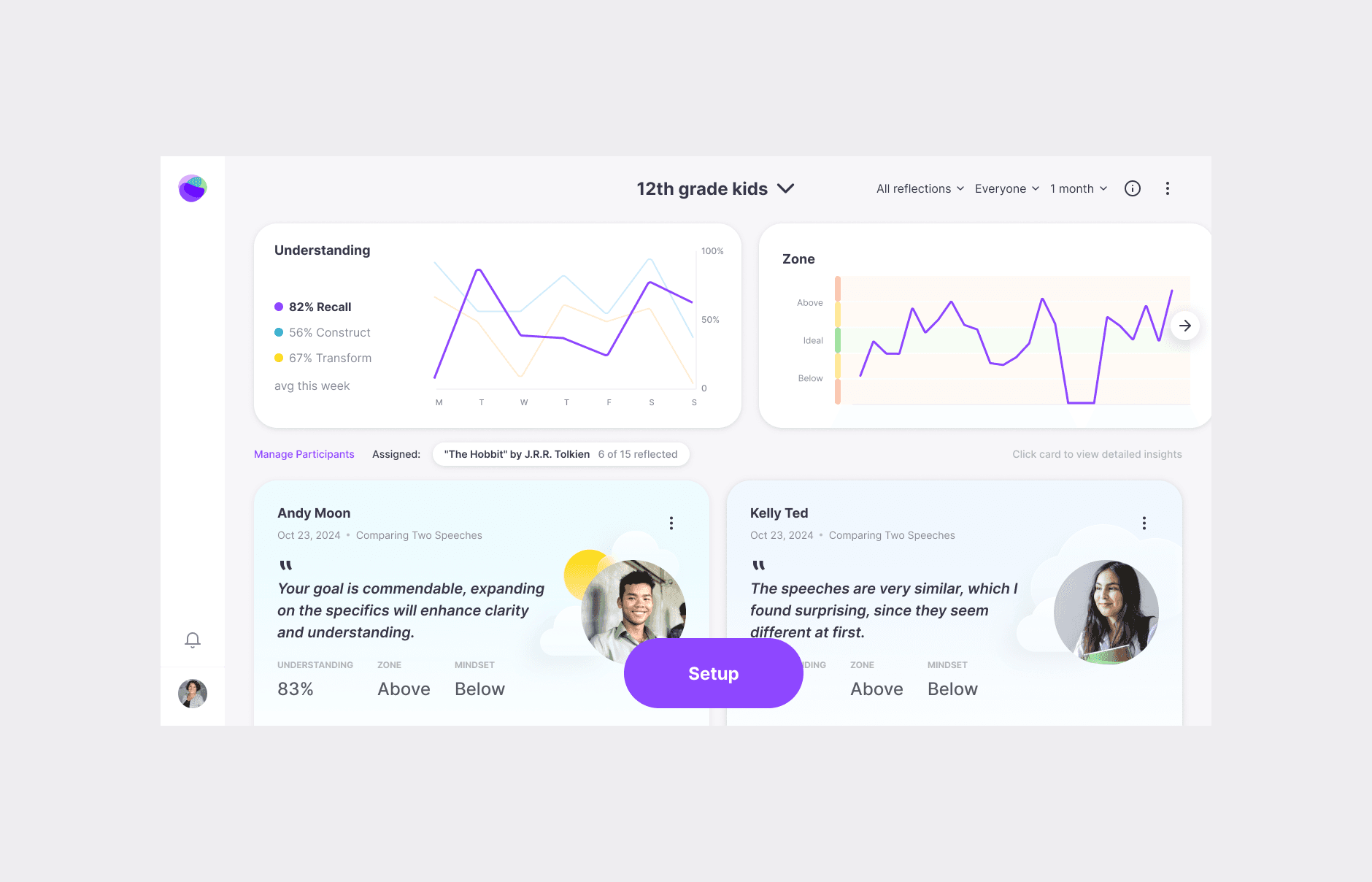
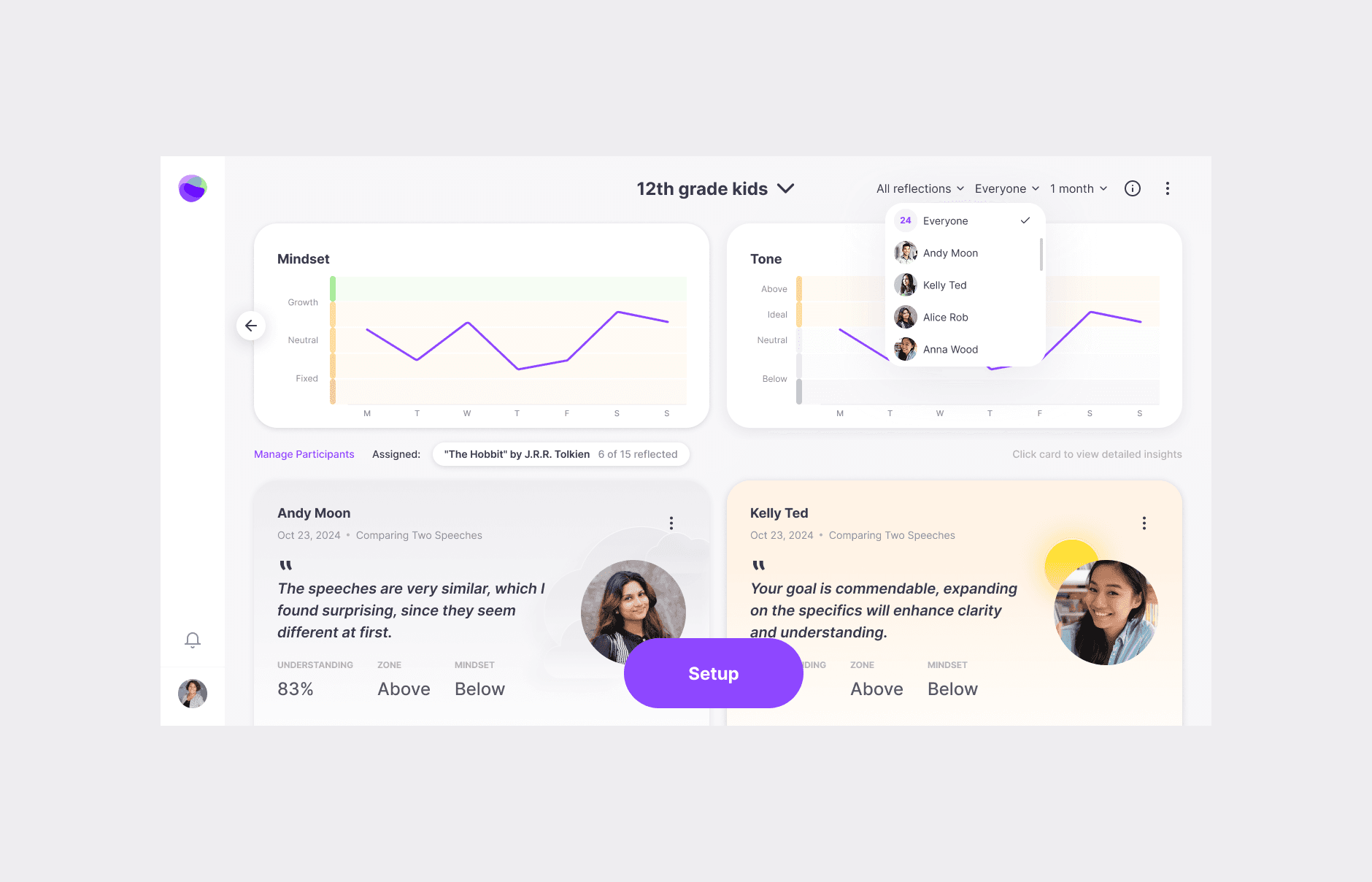
To improve clarity and usability, I simplified the visuals by removing overly complex graphs and focusing on clean line charts that make it easy to see dynamic changes over time. These charts help educators analyze trends and compare performance across different students, time periods, and key metrics. I also introduced interactive elements like hover tooltips, giving access to detailed data without cluttering the interface.
Reflection Cards
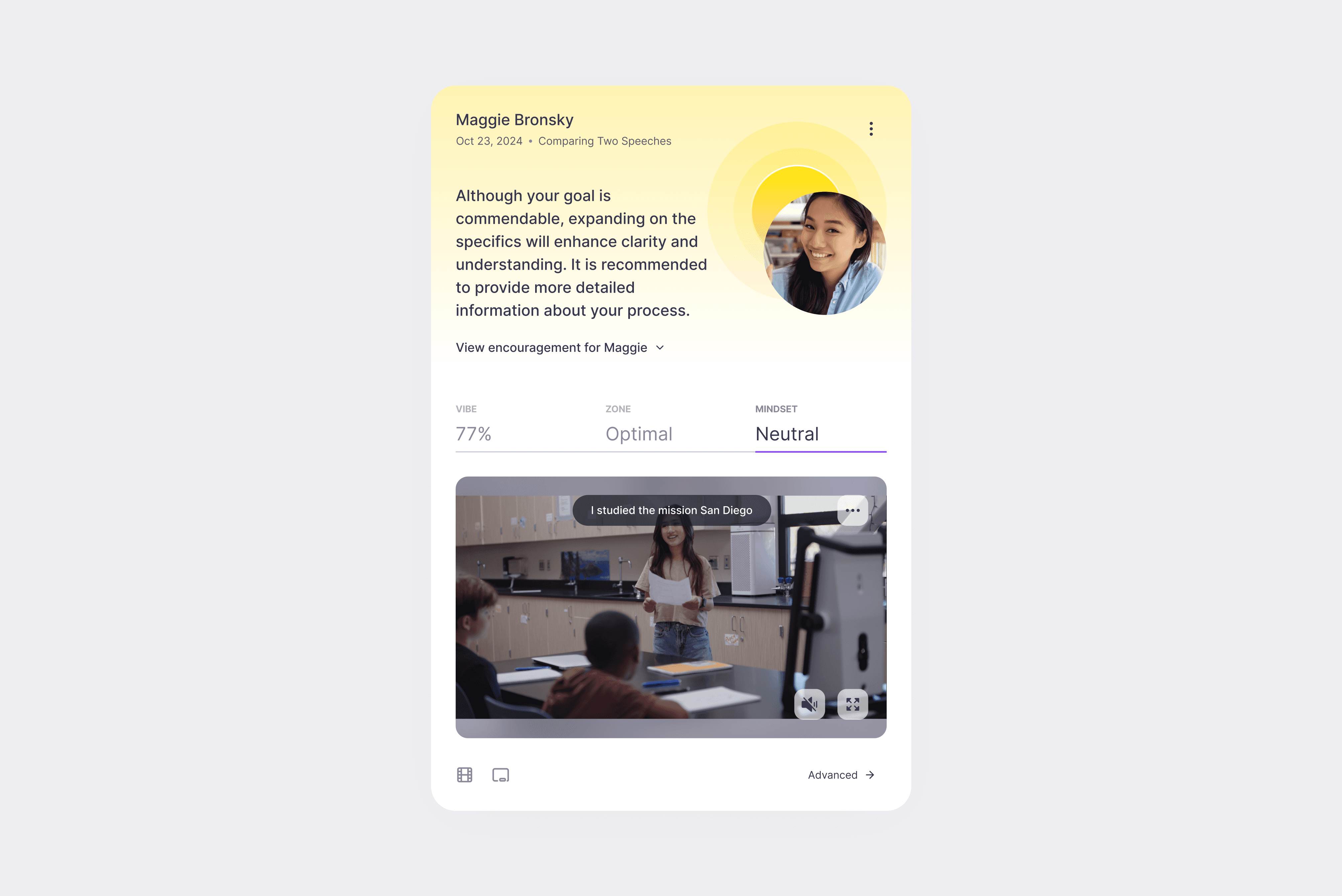
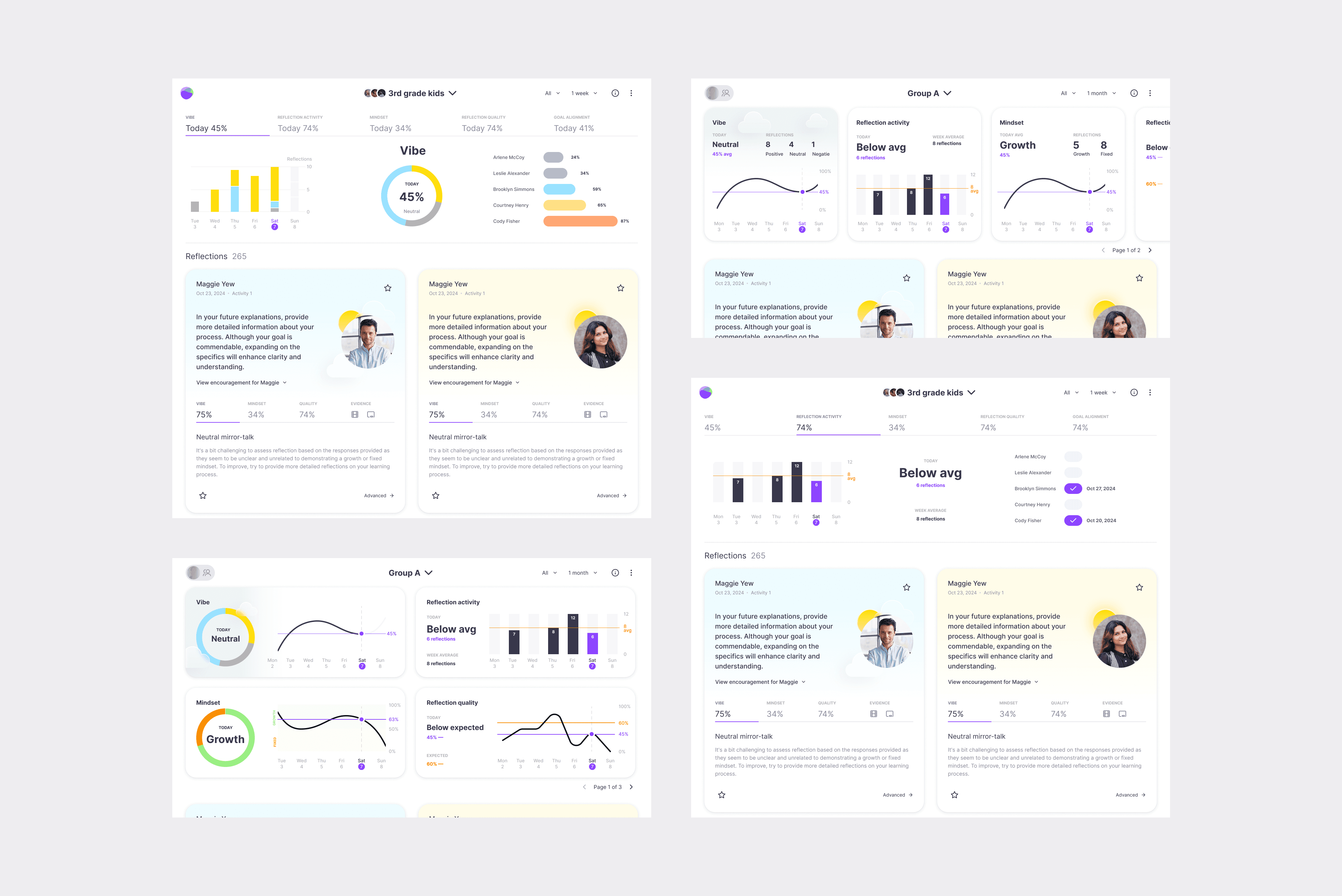
We aimed to turn each card into a compact student insight snapshot layering cognitive, emotional and behavioral signals in a format that was quick to scan but rich in meaning when expanded.
Reflection cards were dense and text-heavy, making them hard to scan.
Important insights like understanding, emotional tone, or growth indicators were buried or unclear.
There was no consistent structure and limited visual hierarchy.
Teachers struggled to quickly assess which students needed support or follow-up.

The redesigned cards included four core insights which was developed and presented in Charts exploration: Tone, Understanding, Zone and Mindset.
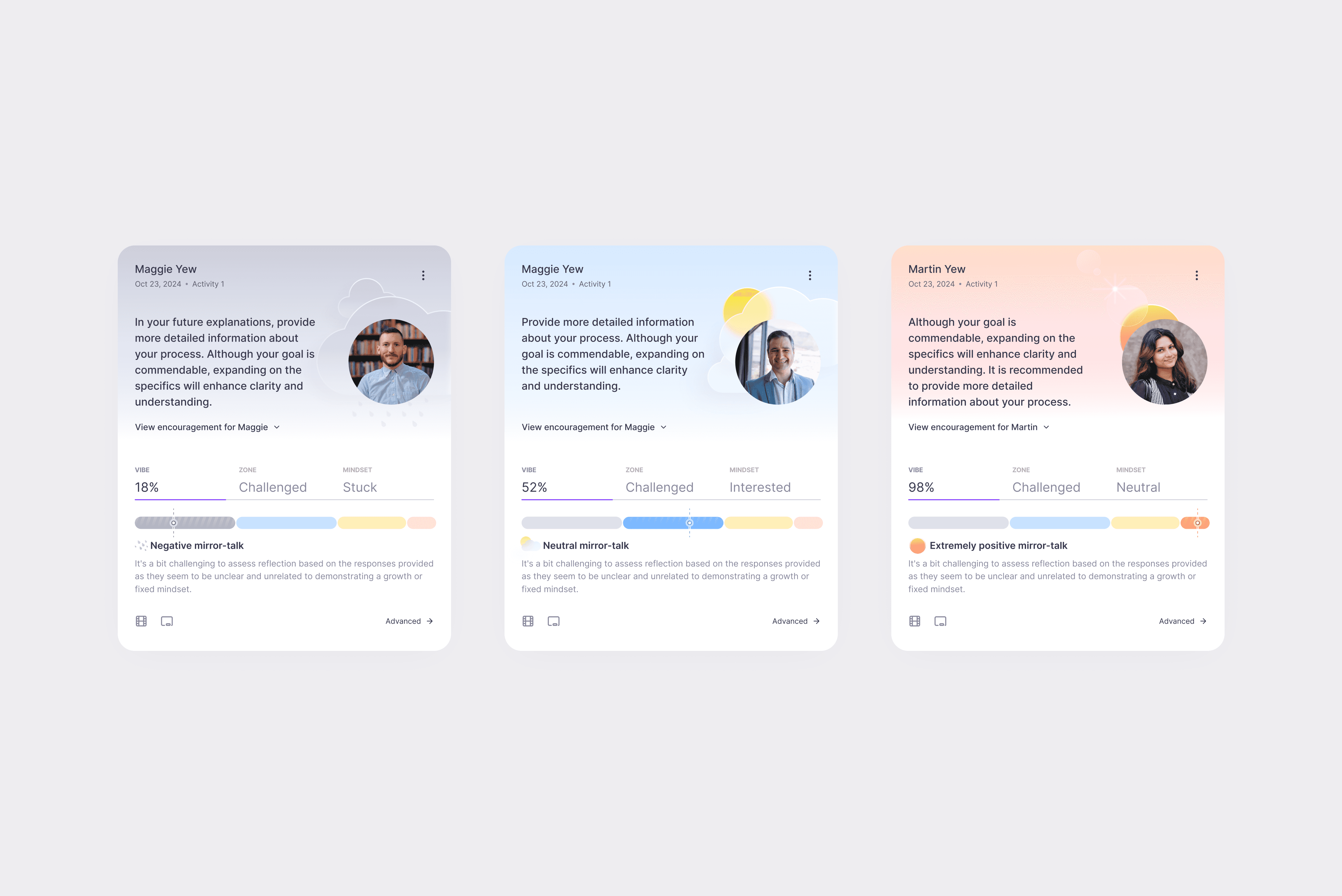
To make abstract insights, especially emotional and developmental ones more intuitive we used of weather-style illustrations (e.g., sunny, partly cloudy, stormy) in liquid glass effect before it was cool to represent Tone/Vibe visually. We developed a range of ten cards, which:
Allowed teachers to scan the class mood quickly.
Made it easier to spot students who might be emotionally disengaged or in need of attention.
Added warmth and familiarity to what might otherwise be a cold, data-driven interface.